
Published by Drug Driving Solicitors — specialist defence lawyers for drug driving charges across England and Wales.
7 Results of Failing a Roadside Drug Test in the UK You Should Know
Failing a roadside drug test is a genuinely unsettling experience, and for most people it marks the beginning of a process they have never encountered before. Understanding what happens at each stage — from the moment the device registers a positive reading to the day a court delivers its verdict — can make an enormous difference to how you respond and how well-prepared you are.
This article walks through seven key outcomes and stages that follow a failed roadside drug test in the UK. Although the law operates as a sequence of events, each point below is worth knowing on its own terms, and together they give you a clear and honest picture of the road ahead.
1. A Healthcare Professional Takes a Blood Sample
The Only Specimen That Can Ultimately Convict You
Once you are at the custody suite and have been seen by the custody sergeant, the investigation moves to its most important evidentiary stage: the collection of a blood sample. This is not carried out by a police officer. Under the Road Traffic Act 1988, the sample must be taken by a healthcare professional, most commonly a forensic medical examiner or a force medical officer, and the correct procedure must be followed precisely.
The healthcare professional will attend the custody suite and explain what they are about to do. You will be asked to consent to the procedure. While a refusal may seem like a way to avoid providing evidence, it carries significant legal consequences of its own, and it is not a step to take without advice from a solicitor. The blood draw itself is a straightforward medical procedure and is conducted in a clinical setting within the custody environment.
Crucially, the blood sample is divided into two portions. One is retained by the police for analysis; the other is offered to you. Accepting your portion matters. If the laboratory later produces a result you wish to challenge, having your own sample independently analysed can be a powerful tool in building a defence. A solicitor can advise you on how to store and submit your portion for testing.
The integrity of the process at this stage — from the qualifications of the person taking the sample to the way it is labelled, sealed, and handed over — is subject to strict rules. Any departure from those rules can become relevant to your defence. This is one of the reasons early legal advice, before any sample is even taken if possible, is so valuable.
2. The Roadside Device Produces a Positive Reading
What a Positive Result at the Roadside Actually Means
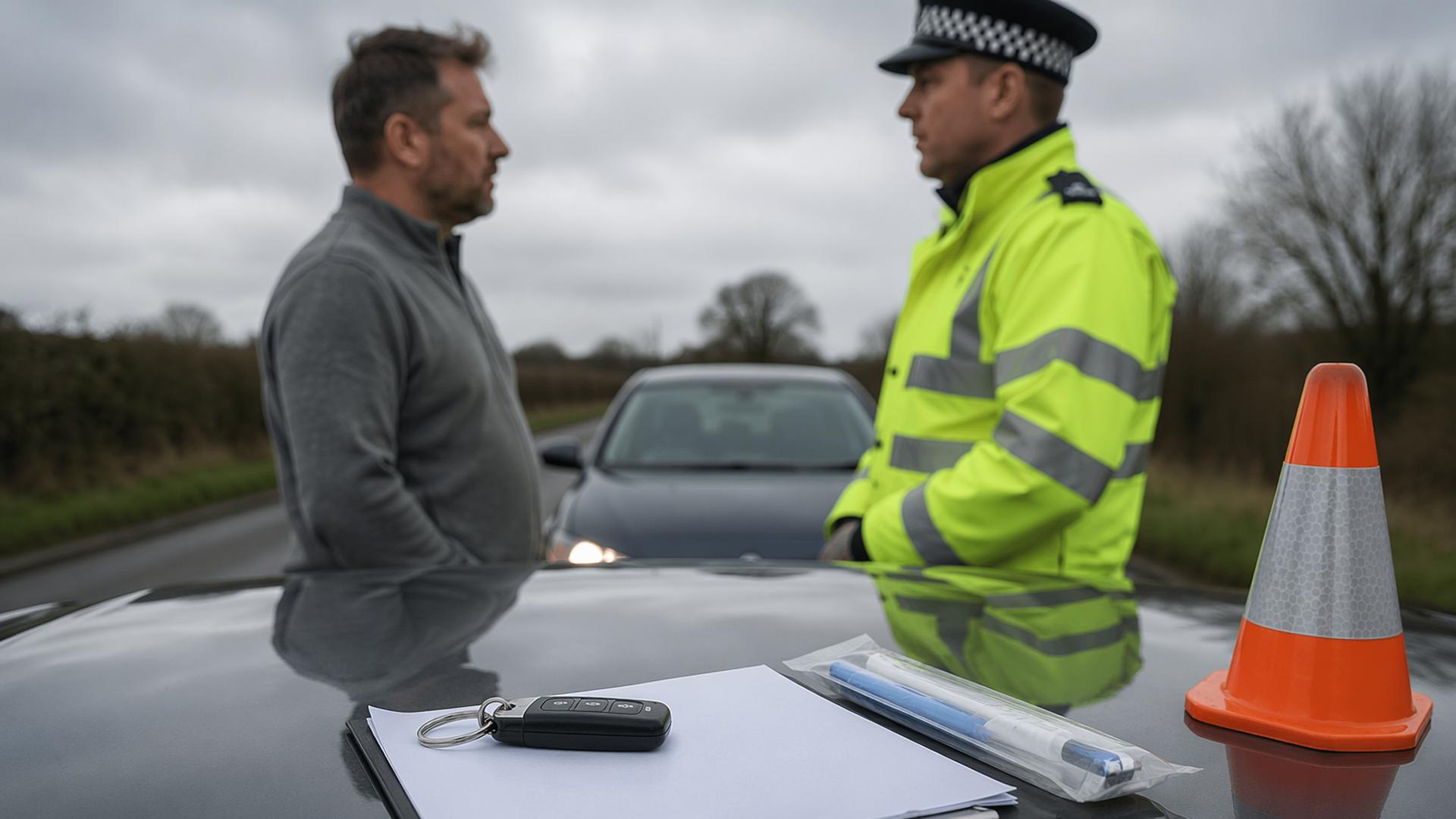
The drug wipe test administered at the roadside is a preliminary screening tool, not a definitive forensic analysis. It is designed to detect the presence of certain controlled drugs — most commonly cannabis and cocaine — and it produces its result within a matter of minutes. If the device registers a positive reading, the officer will treat that as grounds to proceed further, but it is important to understand that this result alone does not establish guilt.
The devices approved for use in England and Wales, known as type-approved drug screening devices, operate within defined sensitivity thresholds. They can produce results affected by a range of factors, including the concentration of the substance, the time elapsed since use, and certain physiological variables. A positive roadside reading is therefore the beginning of an evidential chain, not its conclusion.
At this point, the officer will explain that you have tested positive for a controlled drug and that further steps will follow. You are not yet under arrest simply because the device has returned a positive reading, but the process has formally begun. It is worth remaining calm and composed; anything you say may later be relevant, and engaging a solicitor as early as possible is always advisable.
The roadside test result also determines the direction of travel for the rest of the encounter. The type of drug indicated by the device will inform which procedures follow and, ultimately, which substances the laboratory will be asked to confirm in the blood sample. This is a stage at which precision matters, both for the police and for any subsequent defence.
3. Your Case Is Heard at the Magistrates' Court
How Drug Driving Cases Are Decided and Sentenced
Drug driving offences under Section 5A of the Road Traffic Act 1988 are summary offences, which means they are dealt with in the Magistrates' Court rather than at Crown Court. If you have been charged, you will receive a date to appear before a bench of magistrates or a district judge, and the court will either hear a guilty plea, a not guilty plea leading to a trial, or a combination of pre-trial hearings before the final outcome.
If you plead or are found guilty, the court has a set of sentencing options at its disposal. A mandatory minimum 12-month driving disqualification applies in all cases. On top of that, the court may impose an unlimited fine, a community order, or, in more serious cases, a custodial sentence of up to six months. The precise outcome depends on the concentration of the drug in the blood, any aggravating factors such as a collision or the presence of children in the vehicle, and your personal circumstances.
A specialist solicitor can make a significant difference at this stage, whether by presenting mitigation effectively, identifying procedural issues that undermine the prosecution case, or advising on whether a trial is worth pursuing. The court process is not simply a formality, and the difference between a well-prepared defence and an unprepared one is often visible in the outcome.
It is also worth knowing that a Drug Bus Awareness Course may be offered as part of sentencing in some cases, potentially reducing the length of the disqualification. This is not available in every case, and a solicitor can advise whether it is likely to be available to you and whether it is in your interests to seek it.
4. The Officer Administers a Statutory Warning
A Legal Requirement That Carries Real Consequences
Before an officer can require you to submit to a roadside drug test, they must administer what is known as a statutory warning. This warning is a formal legal requirement under the Road Traffic Act 1988, and it must be given in a specific form. The officer is required to inform you that failing to provide the specimen — or failing to co-operate with the test — is itself an offence.
The purpose of the statutory warning is to ensure that you understand what is being asked of you and what the consequences of non-compliance are. It is not optional for the officer, and if it is not administered correctly, the subsequent requirement to provide a specimen may itself be unlawful. This is one of a number of procedural safeguards built into the drug driving framework that can become relevant to a defence.
You may feel anxious or defensive at this moment, and that is entirely understandable. However, the most important thing you can do is listen carefully to what is being said to you, note any details you can recall about how and when the warning was given, and co-operate with the process. Your recollection of this moment can be valuable later, particularly if your solicitor identifies that the statutory warning was not administered in the correct form.
The statutory warning sits at the gateway of the entire drug testing process. Without it being properly given, everything that follows can potentially be challenged. It is a small but legally significant moment, and it is one that a specialist drug driving solicitor will always examine closely when reviewing your case.
5. The Blood Sample Is Sent for Laboratory Analysis
The Forensic Process That Determines the Outcome
Once the blood sample has been taken and sealed at the custody suite, it is transferred to a laboratory nominated by the relevant police force for formal forensic analysis. This is the stage that takes the longest, and it is often the source of considerable anxiety for those waiting to hear what happens next. The analysis is conducted to determine whether any controlled drugs are present and, if so, at what concentration.
The laboratory will test the sample against the specified limits set out in the Drug Driving (Specified Limits) (England and Wales) Regulations 2014. These limits are set at very low levels for illegal drugs — for cannabis, for example, the limit for delta-9-tetrahydrocannabinol is just 2 micrograms per litre of blood. For certain prescription drugs, higher limits apply, and the presence of a drug does not automatically mean the limit has been exceeded.
The turnaround time for laboratory analysis varies. It can take anywhere from a few weeks to several months, depending on the laboratory's workload and the complexity of the analysis required. During this period, you are free to go about your daily life unless bail conditions have been imposed, but the investigation remains open. This is an ideal time to instruct a solicitor and begin gathering any relevant information in support of a potential defence.
The laboratory report is a technical document, but it is not infallible. Chain of custody, calibration records, the qualifications of the analyst, and the methodology used are all potentially subject to scrutiny. A solicitor with experience in drug driving cases will know exactly what to look for and will be in a position to commission independent expert review where the circumstances justify it.
6. You Are Charged or Told No Further Action Will Be Taken
Two Very Different Outcomes at the End of the Investigation
Once the laboratory results are received and reviewed by the Crown Prosecution Service, a charging decision is made. There are two possible outcomes at this stage: you are charged with a drug driving offence under Section 5A of the Road Traffic Act 1988, or you are informed that no further action will be taken. The latter outcome, while not guaranteed, is more common than many people expect, particularly where the laboratory results are inconclusive or where procedural issues have been identified.
If you are charged, you will be required to attend court. You will receive a charge sheet setting out the specific allegation against you, along with a summons or postal requisition indicating the date and location of your first court appearance. This is the point at which legal representation becomes essential if you have not already instructed a solicitor. The time between charge and first appearance can be short, and there is preparation to be done.
If no further action is taken, the case against you is closed. However, this does not necessarily mean the arrest is expunged from your record in all circumstances, and it is worth taking advice on the implications for your record, particularly if you work in a regulated profession or hold certain licences. A solicitor can advise on what steps, if any, are worth taking following a no further action outcome.
The charging decision is influenced by a number of factors beyond the raw laboratory result. The strength of the overall evidence, any procedural issues identified during the investigation, and the public interest in prosecution all play a role. This is why the quality of the investigation at every earlier stage matters, and why having a solicitor engaged from the outset can sometimes influence the trajectory of the case before it ever reaches court.
7. You Are Arrested and Taken to a Custody Suite
What to Expect When You Arrive at the Police Station
If the roadside test has returned a positive result and the officer has reasonable grounds to proceed, you will be placed under arrest and transported to a police custody suite. This is a standard part of the drug driving process and does not, in itself, mean that a conviction is inevitable. Arrival at the custody suite marks the transition from the roadside encounter to the formal investigative stage.
At the custody suite, you will be booked in by a custody sergeant, who is responsible for ensuring that your rights are observed throughout your detention. You will be informed of your right to free and independent legal advice, and you are strongly encouraged to exercise it. A duty solicitor can be contacted at any time of day or night, at no cost to you, and speaking to one before any further steps are taken is always the right call.
The custody sergeant will authorise your detention for the purpose of obtaining a specimen, and the investigation will proceed from there. You will be asked a number of questions as part of the booking-in process, and your personal property will be recorded and held securely. The custody environment can feel intimidating, but the process is governed by strict rules under the Police and Criminal Evidence Act 1984 and its codes of practice, which are there to protect you.
During your time in custody, it is worth staying as calm and co-operative as possible while not making any voluntary statements beyond what is strictly necessary. The information you provide at this stage can form part of the evidence against you, and the most prudent approach is to wait until you have had the opportunity to speak with a solicitor before answering any substantive questions.
What Comes Next: Understanding the Full Picture
Failing a roadside drug test sets in motion a process that can feel overwhelming, particularly if you have never had any dealings with the criminal justice system before. Each of the seven stages outlined above carries its own significance, its own procedural requirements, and its own opportunities for a well-prepared defence. Knowing what to expect at every point is not just reassuring — it is practically useful, because the decisions you make in the early stages can shape the outcome of the case as a whole.
Frequently Asked Questions
What Is a DG10 and How Long Does It Stay on My Licence?
DG10 is the DVLA offence code assigned to the standard drug driving offence of driving or attempting to drive with a controlled drug above the specified limit under Section 5A of the Road Traffic Act 1988. Once recorded on your driving licence, it remains visible for 11 years from the date of conviction and can be seen by any insurer who runs a check against the DVLA database. The practical consequence is a significant increase in insurance premiums, often lasting for the full duration of the endorsement period. The implications of a DG10 can extend beyond insurance to employment and international travel, and a specialist solicitor can give you a clear picture of what that means for your specific situation.
What Are the Most Common Reasons Drug Driving Charges Are Dropped?
There are a number of grounds on which drug driving charges are frequently challenged or discontinued. The most common include: the statutory warning not being administered correctly before the roadside swab was requested; use of a device that was not type-approved for the specific substance detected; irregularities in the chain of custody for the blood sample; failure to properly offer the defendant their portion of the blood sample; errors in the laboratory analysis process; and questions around the lawfulness of the initial stop. A specialist solicitor will review all of these points as a matter of routine, not only the headline test result, and will identify any weaknesses in the prosecution case.
What Happens if I Refuse to Give a Blood Sample at the Custody Suite?
Declining to provide a blood specimen without a reasonable excuse is a criminal offence in its own right under Section 7A of the Road Traffic Act 1988. The penalties are the same as those for a drug driving conviction itself, including the mandatory minimum 12-month driving ban. The law defines reasonable excuses very narrowly, and a medical reason for refusal must be properly evidenced to be accepted. It is not a decision to take without first speaking to a solicitor, and in most circumstances the better course of action is to co-operate with the process and challenge the result later if grounds exist.
What Should I Do in the Days Immediately Following a Failed Roadside Drug Test?
The period immediately after failing a roadside test is more important than many people realise. The priority is to write down everything you can remember about the encounter while it is still fresh: the time, location, what the officer said, how the test was conducted, whether the statutory warning was given, and any other details that seemed notable. This contemporaneous account can be genuinely useful to your solicitor when reviewing whether the correct procedures were followed. You should also instruct a specialist drug driving solicitor as early as possible, even before you know whether you will be charged, since early advice can shape how you engage with the process and identify any issues worth preserving for a later defence.
How Long Does It Take From Failing a Roadside Drug Test to Being Charged?
The process typically runs between two and six months from the date of the incident, though it can extend beyond that in some cases. The most significant source of delay is the laboratory analysis of the blood sample, which depends on the nominated laboratory and its current workload. Once the laboratory report is received, the charging decision tends to follow relatively quickly. If six months have passed since the incident and you have not received any communication, it is worth seeking specialist legal advice on where matters stand.
What if the Drug Found in My Blood Was Prescribed by My Doctor?
A statutory medical defence is available under Section 5A(3) of the Road Traffic Act 1988 for drivers who can demonstrate that the drug was lawfully prescribed or supplied to them, that they took it in accordance with their medical advice, and that their driving was not impaired. The defence exists in law but is narrower in practice than many people assume. It requires proper evidencing and careful presentation, and it does not apply automatically simply because a prescription exists. Drug Driving Solicitors has specific expertise in cases involving prescription medication and can advise on whether the defence is available and how best to pursue it.
Drug Driving Solicitors is a specialist law firm representing clients in drug driving cases throughout England and Wales. If you have failed a roadside drug test and want to understand where you stand, contact us for a free initial consultation or visit drugdrivingsolicitors.co.uk. Taking advice early carries no cost, and it can make a real and tangible difference to how your case is resolved.